Rental & Booking Management Mobile App
The Problem
Nonprofits such as worship organizations and churches struggle to make ends meet, and one way they explore financial stability is through renting out their property. However, most churches experience understaffing, poor documentation, and extremely tight budgets that makes managing their property confusing and inconsistent, which can cause delays, errors, and mistakes when booking their spaces.
The goal of this project was to solve efficiency issues and to tackle understaffing problems with administrative staff and renters/clients by creating a mobile app that automates repetitive tasks, provides search features and a database that allows renters to customize and filter their needs, includes a customizable venue management system for admins, fast checkout times, and opens up nonprofits and churches to their communities.
Background
Back in 2023, I was hired as an office manager at a church to facilitate rental bookings, take care of volunteers and congregation members, send and receive invoices, etc. It was a multi-faceted job which had very limited support, staffing, and training. One of the biggest issues was around the renting process, which had six buildings to manage, and many renters everyday using the space
I put some band-aids on the problem by adding extra steps to my process (i.e. double and triple checking, adding an excel sheet to track the schedule, and tracking each renter’s payment history and schedule, adding a notes section to every renter’s file). For a job that is only part time and is often volunteer, I decided to research what was available for non-profits and small church communities.
Secondary Research
Web searches
Reddit Communities
Church Websites
See what redditors had to say about the issue:
Have you had to rent out your Church or rent a Church space? What was it like? : r/methodism
To summarize, there are organizations for different denominations that help out churches looking to rent. These organizations have boards that give guidelines and rules on what to do, and also provide customized guidance for a fee.
Primary Research
Having learned a bit about the general state of oversaturation amongst church buildings in the neighborhood, I knew I needed to actually speak to those who work in church offices and those who rent those spaces. This would help me get both qualitative and quantitative data about the target users who I will be designing for.
Surveys
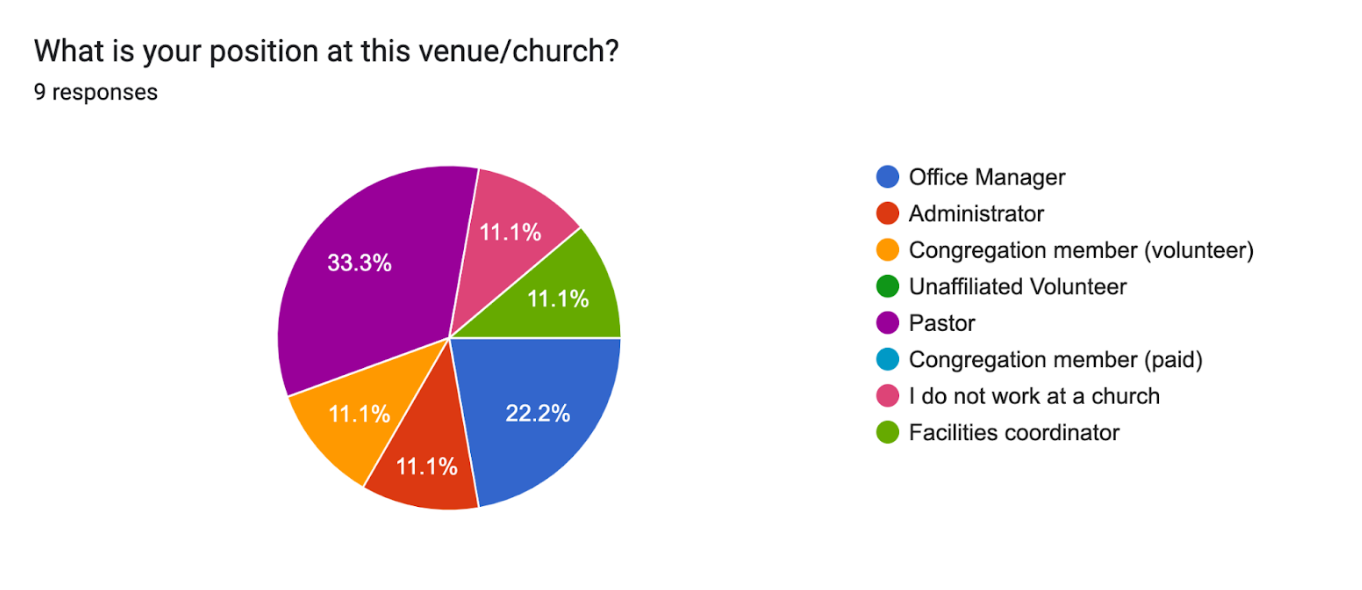
Using my network of renters, I surveyed 9 administrators/staff/pastors and 26 renters. I also reached out to local churches via their websites to see what their customer service was like and to get connected with the staff.
This was a big challenge, because the church staff were generally unavailable, unwilling to talk, or nonexistent.
Some key insights were:
Users were often not necessarily trained administrators, the most common administrator being the Pastor of that church (33%).
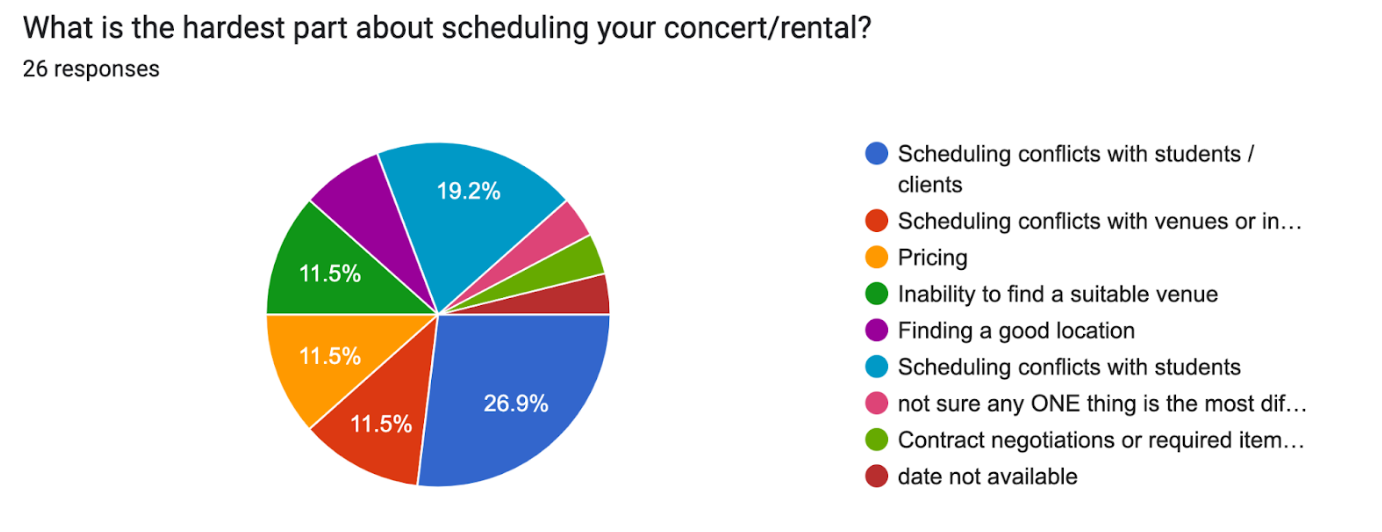
These surveys showed me there was more to learn, and I wanted to go to the ones at the front-lines of this issue - the admins, secretaries, and music teachers of the church world. One thing I wished I had asked in these surveys was “What programs do you use to manage your church?” This would help me realize whether these Saas companies were making it into real workflows.
So I interviewed 5 office managers/secretaries/administrators from local churches and community centers And 5 renters from the church network to get their personal story.
Interviewing Venue Staff
Research Synthesis
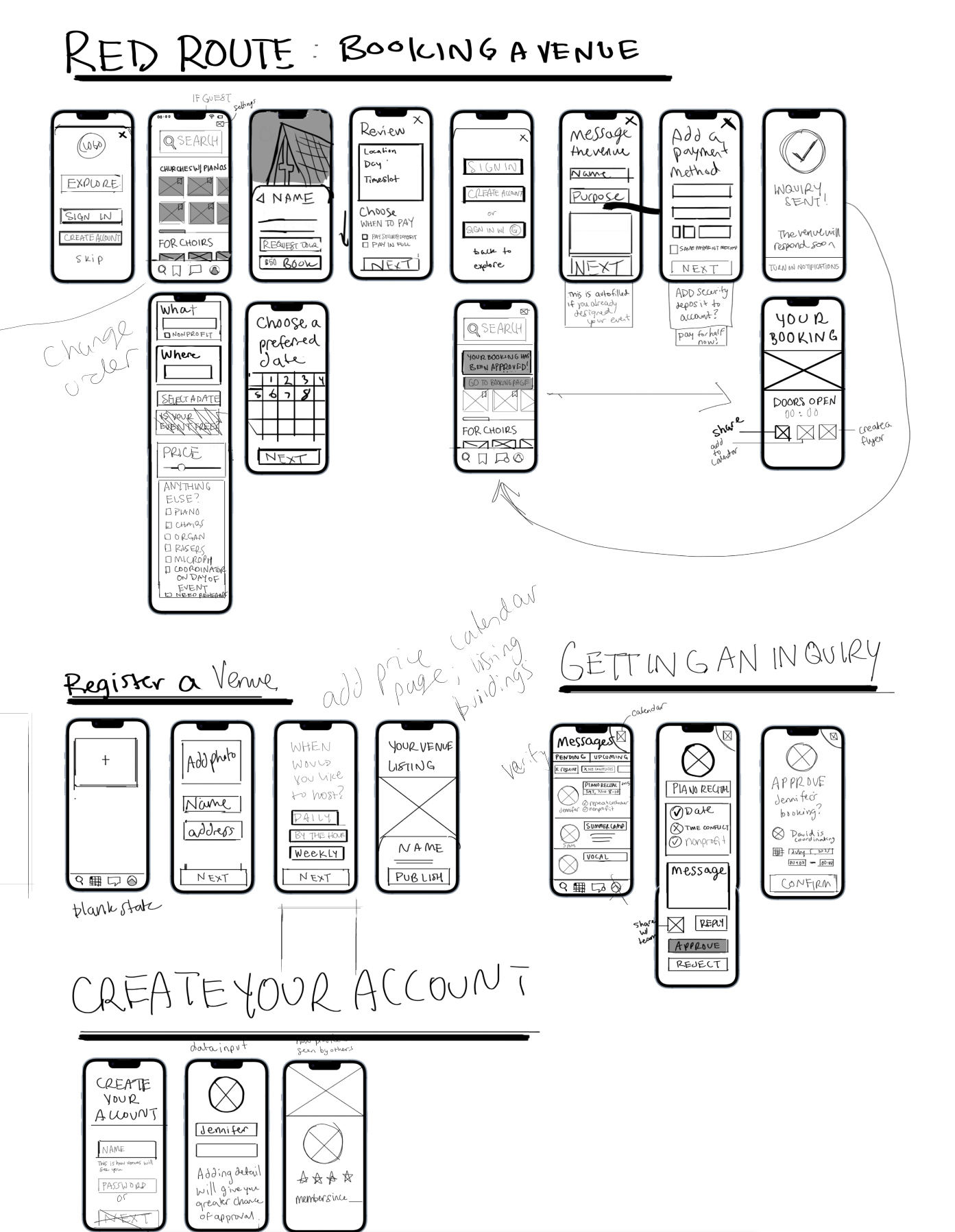
Our most important routes will be:
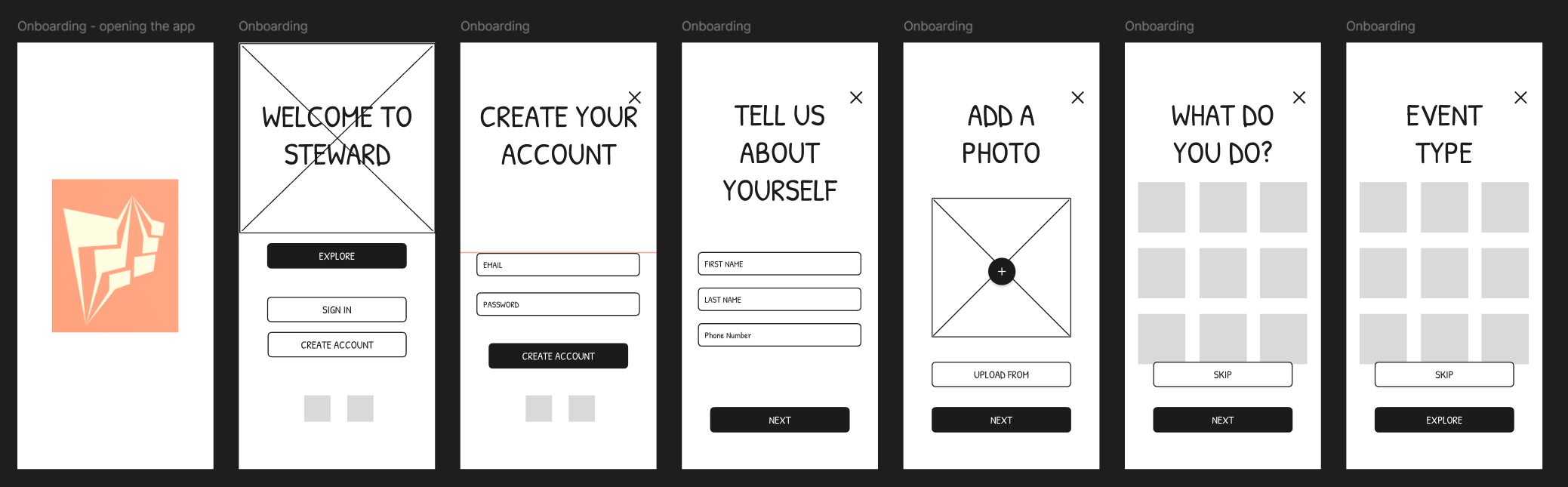
the onboarding
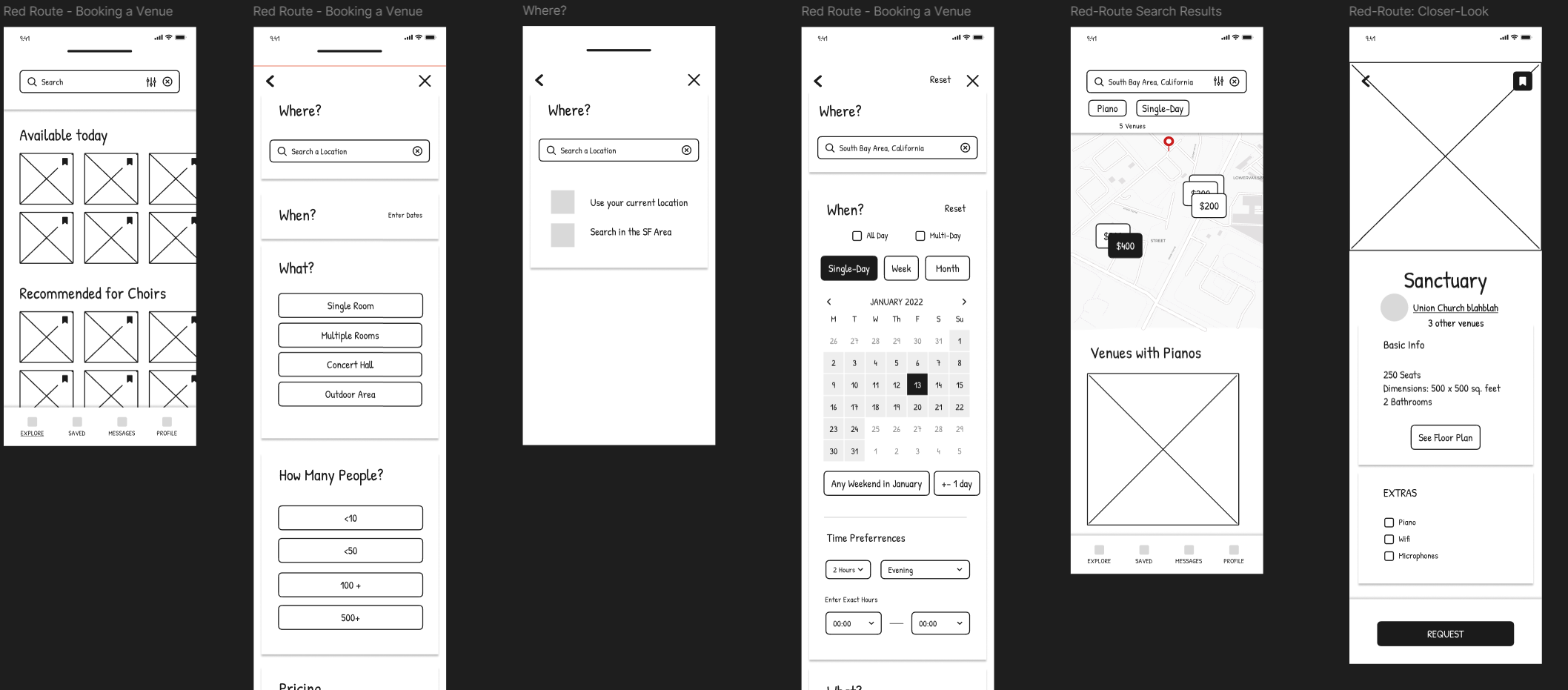
booking a venue
approving a booking
creating a listing
Wireframing
Prototyping
Conclusion
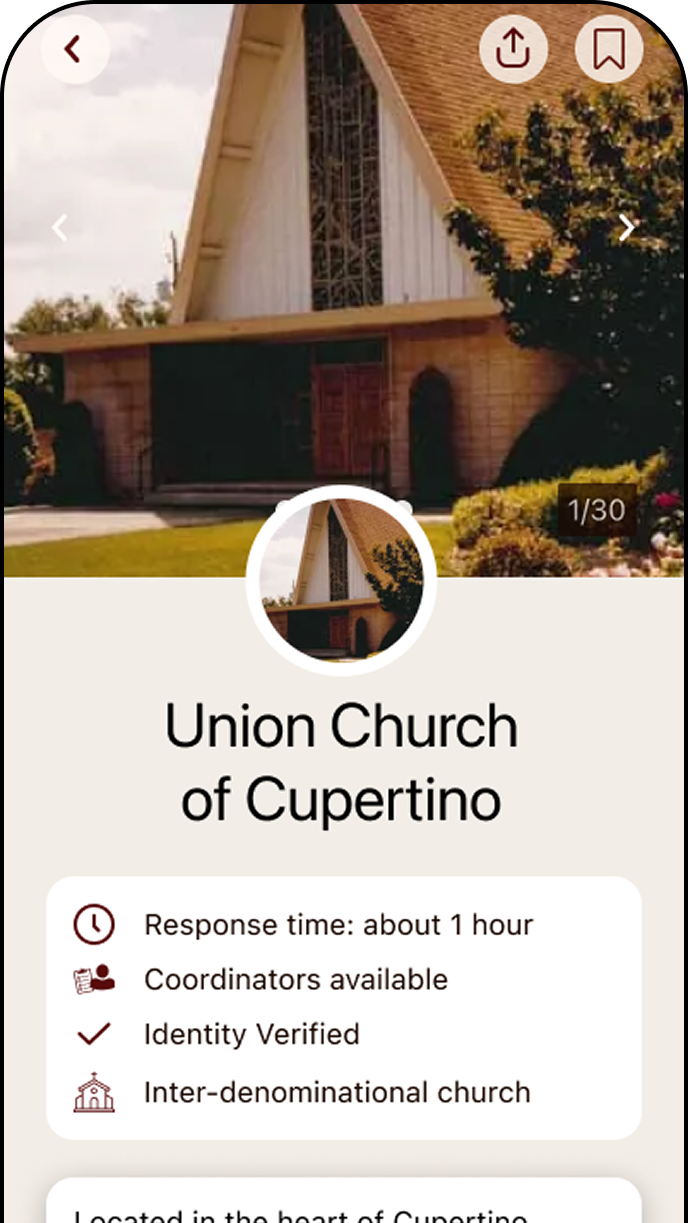
“The cost to keep the facilities going, and Pastor salaries and music program exceeded what the congregation could bring in” - Rich, Union Church of Cupertino
One thing I found surprising was that even I had trouble making an appointment with them - people wouldn’t pick up, people would be suspicious or unwilling to disclose or just didn’t have the time. One interview was conducted over the phone impromptu, because she said “oh I have ten minutes” but then told me about all the issues she’s dealing with for the next 35 minutes. It gave me insights into how cold calls feel for music teachers or renters who feel unwelcome in this important community.
Three clients used pen and paper to organize the church schedule, and spent their work day on the phone or answering emails at a desk. One secretary is very stressed about getting the staff needed to host the many events that they organize, and another is about to retire after . They’ve had issues with rentals going really unwell due to miscommunication. They also do not really do any bookkeeping.
“The payment schedule is “in my blood”, and I keep track of it by hand” - Barbara Campbell United Methodist
Often, these users have paper and pencil and use some combination of free software jerry-rigged together to create their rental management.
Key Takeaway: Small churches use whatever frugal tools they can to get their job done and stay afloat.
Interviewing Renters
The most important thing I learned was that there was a huge sense of instability for these people. Whether you are a single-day renter or the owner of a year-round educational program, interviewees commented about how difficult it is to manage their own business when “no one wants to rent” anymore. Music teachers in particular had a huge issue with scheduling, and marketing their work.
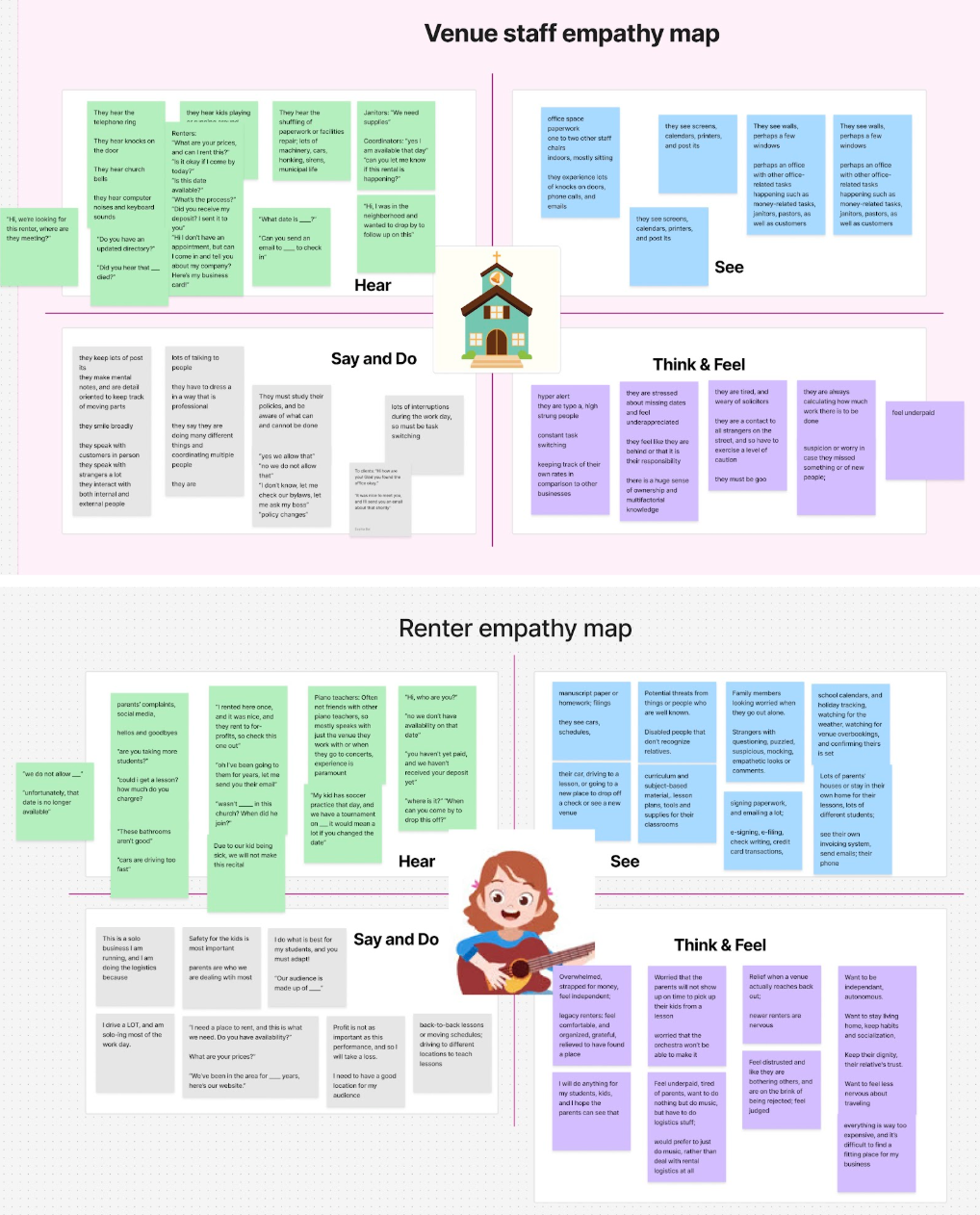
How Might We
Allow new renters to feel confident and safe entering the renter market?
create trust and clarity between renter and venue on policy, compatibility, and availability?
Speed up the rental process for both renter and venue that makes renting predictable and stable?
Increase the availability of venues?
Make it easier for renters to find suitable venues?
Make it easier for venues to choose renters?
Reduce the learning curve for churches new to the rental market?
Sketching Red Routes
Brand, Components, and Hi-Fi Screens
User Testing
For this project, it was difficult to manage the scope of the problems these renters and managers face day-to-day.
There were times that I knew the MVP is only one tiny component of the work flow the managers attend to when in the office, and also that most of them use a desktop for their tasks is not lost on me.
The future goals for this project are to continue to add some core features for the venue managers that would enhance customizability, and provide actual functionality to its screens. Most disappointed were some of them when “learn more” was not available.
Some key features that are necessary for this product to move to its next stage are:
A screen that allows users to edit their event details, especially on the review & continue page
Add features to the approval process, which was too simplistic - dive deeper into payments and fees and rental-dependent prices change.
Add features that allow customers to be able to change their rental without fear
This problem is a big one that is being worked on by larger teams such as Church Management Systems, and I will continue to follow the trajectory of their progress, and if smaller churches are unable to afford such sophisticated systems, Steward would be a massive asset to their list of free apps.
UX Research - What I learned
Researching an industry I am unfamiliar with is an important acknowledgement - there is a learning curve, which was aided most by speaking to people and going on reddit which took time before I could even learn what to ask
General knowledge of the rental industry as a whole
How do they categorize/define size, quality, success, behavior, support etc.
Denomination matters - The Church of Latter Day Saints and the Catholic Church both have their own giant network of community/financial support, even for things like key management, which is not widely available to other denominations (?)
Size matters - large +1,000 churches have the money and staff and may be able to afford CRMs and ChMSs; the local churches I interviewed had no such tech and were independently run
What is the lingo that this industry uses to get their job done
Tech - what is the tech called that is available and what is the business side of it? What do you need to do
Survey questions I wish I had asked:
How big is your congregation?
How many buildings do you have?
What software do you use to manage your church?