TiriVelo©
Pet Service Marketplace
Admin Dashboard Enhancement
TiriVelo is designing its internal administrative dashboard which currently lacks a cohesive and testable payments flow, specifically in how the care reports flows are managed in relation to a provider booking and in cases of emergencies. I led a team of 4 Springboard designers where we focused on clarifying this process so that it is intuitive, used in the right use cases, and helps TiriVelo’s internal system be as transparent as possible.
01
Discover
Project Scope, Competitive Analysis, & User Research
This phase is the most crucial for a group of four designers especially because we jumped onto the project with some design decisions made for us already.
Because admin dashboards are complex, we focused specifically on the most important tasks the admin would need to do on a daily basis.
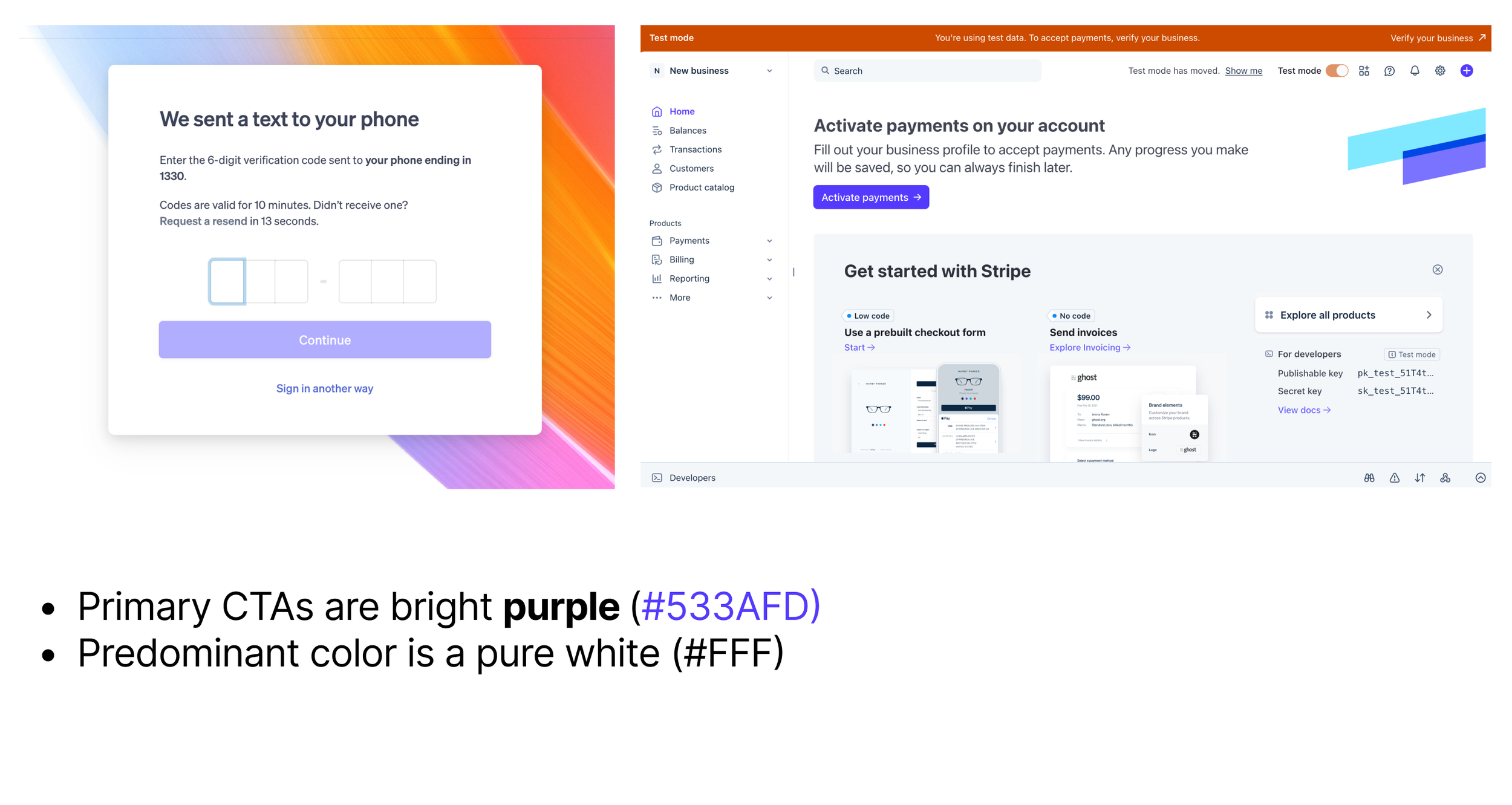
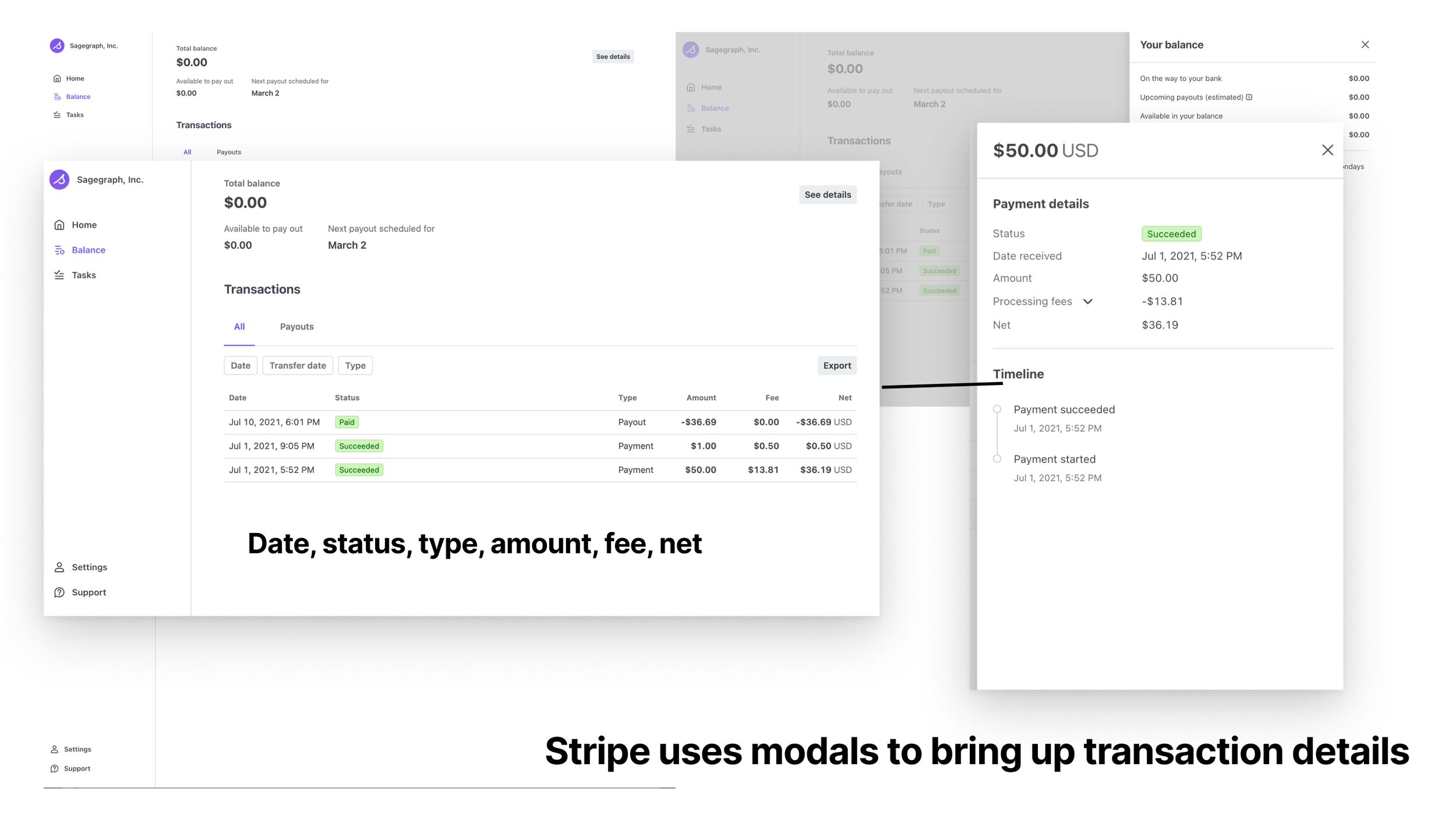
In order to find that out, I conducted a quick analysis of the Stripe dashboard, seeing how they organized their information as well as to see UI layout ideas. Because we were creating a dashboard from scratch with unique guidelines and didn’t have any active users, I also reached out to administrators in my network to find out what was most important to them.
Who is our user, and what are the most important routes our user must take when it comes to payments and cancellations?
02
Ideation
Defining red routes (the most important tasks to be completed) and developing the user flow for each route.
My team and I created user flows to define the specific steps the admin must take for each situation. Because we were working mostly on edge-cases, it was important to reference the company documentation - admins are not needed when things run smoothly.
03
Design & Prototype
Our team used a set of component previously designed, which involved 1. understanding their design system and 2. Seeing what needed to be added in order to design our prototypes
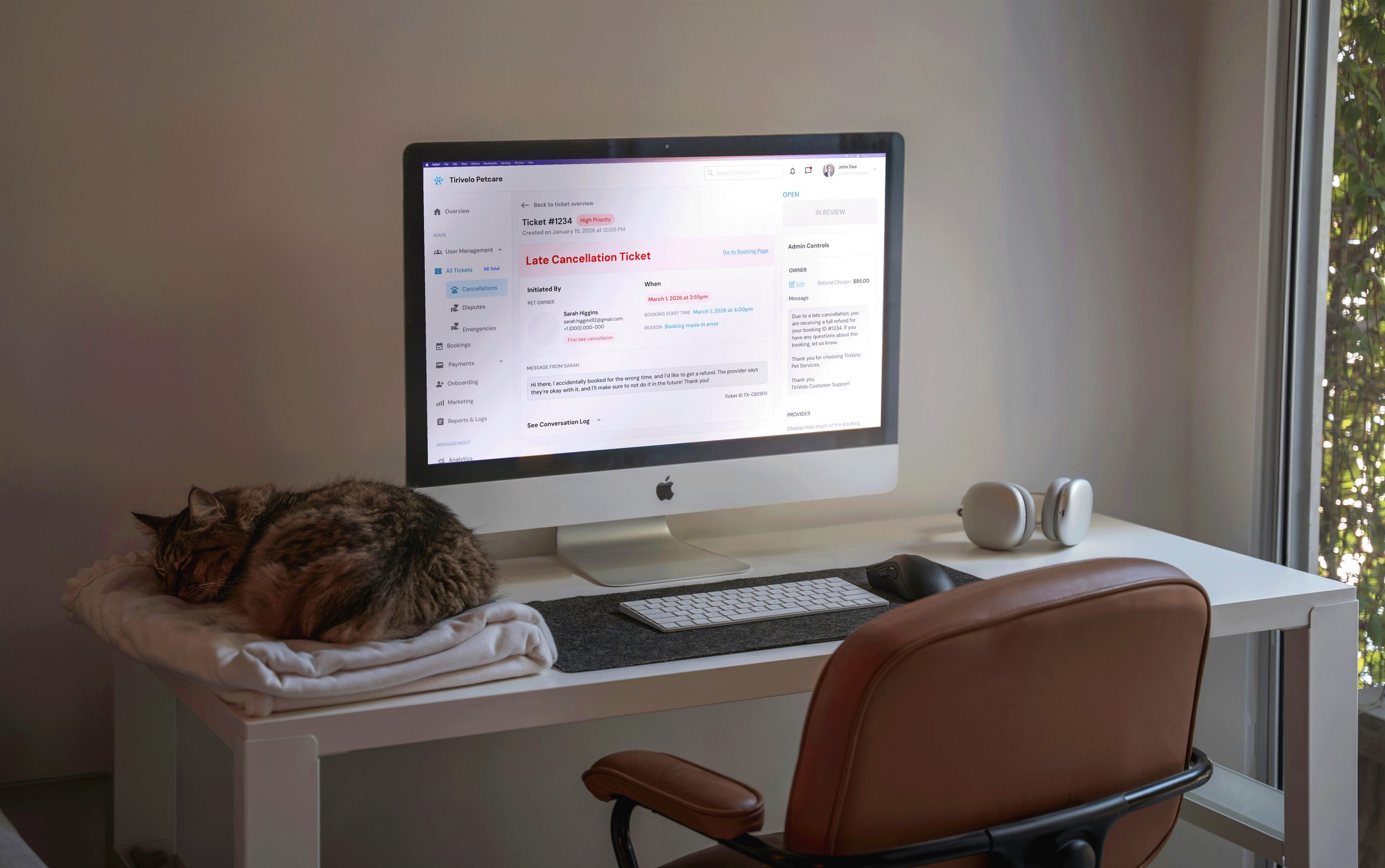
The goal was to create a functional prototype for specific use cases, in my case, prototyping the user flow for an admin dealing with a late cancellation ticket.
DISCOVER
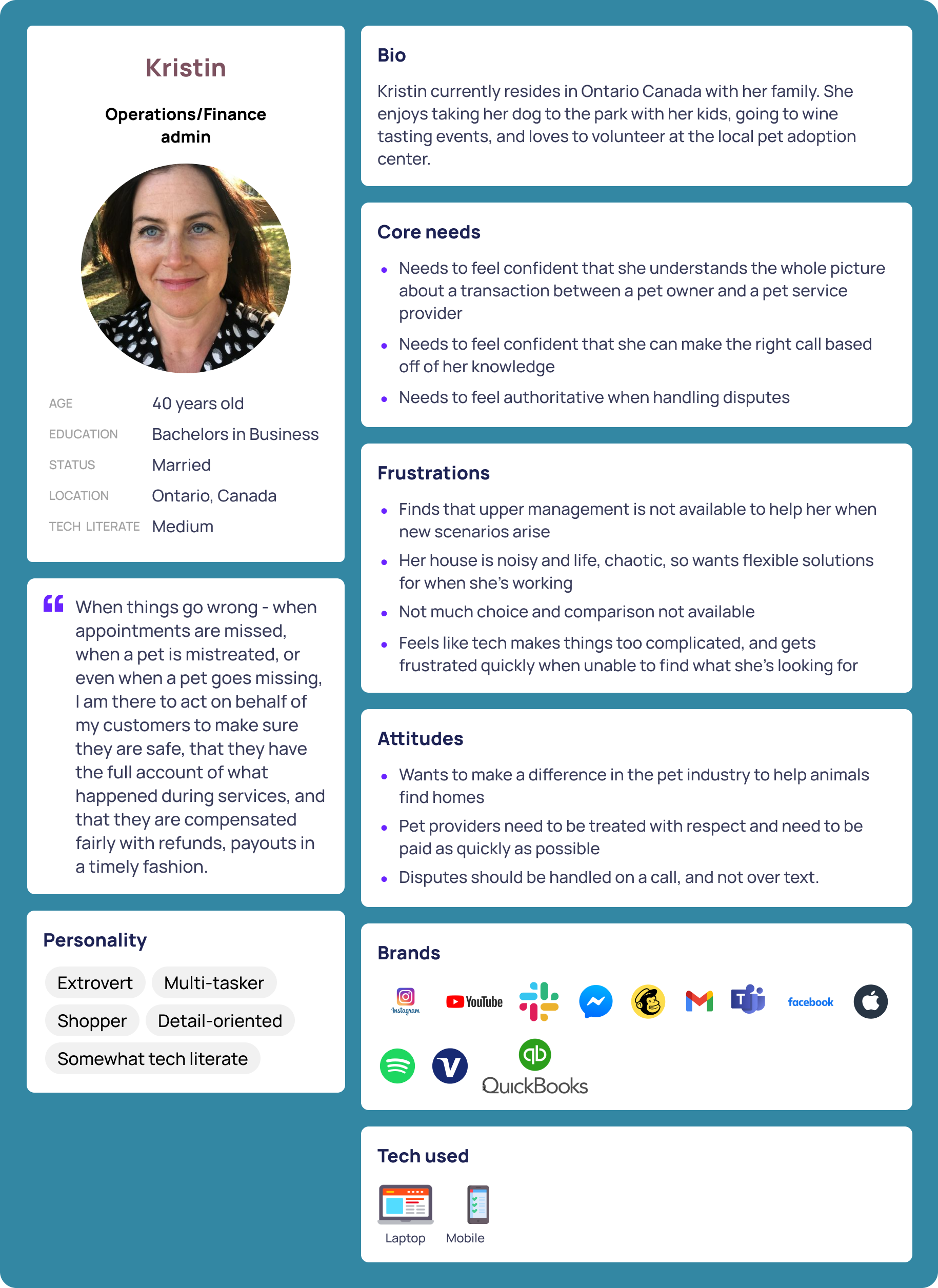
I began with some basic stats on administrators to verify my initial assumptions about our user:
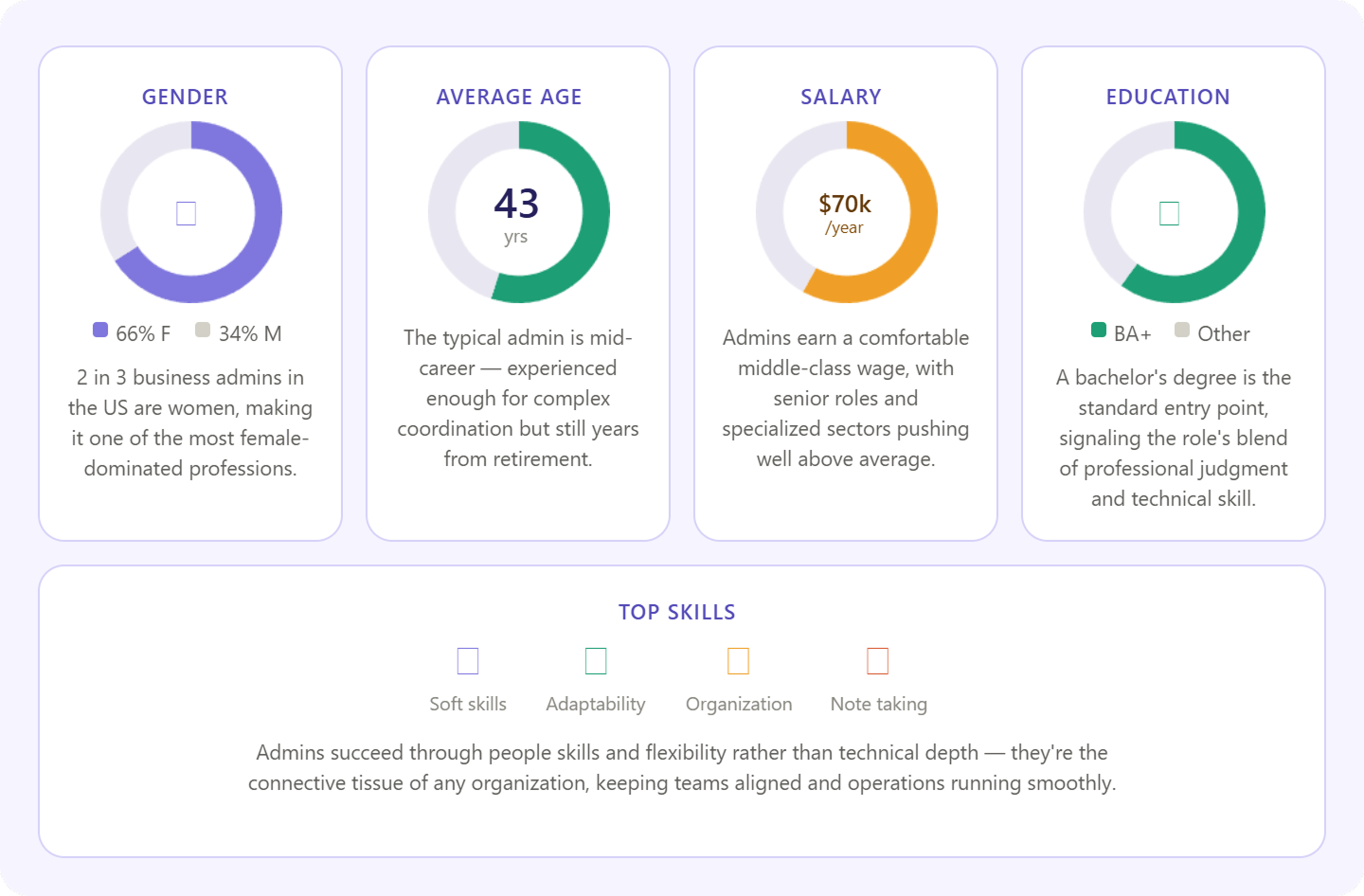
I reached out to the administrators that I knew in my network, to learn what type of person they are and their education. From there, I surmised that the specific user I needed was one working in the niche space of pet marketplaces, which meant looking at competitors and dashboard examples alike, so from there, I researched the job applications on Rover’s petservice website, AirBnB’s job listings, and other administrative but remote roles. These assumptions about the user were reinforced by the CEO’s ideas about the types of people he’d hire for this role.
The user works closely with data, and has likely seen many programs with training programs.
The best we can do is to stick to standards they're already familiar with as well as take them step-by-step when learning something new.
“[The most important thing is] having a single source of truth, so we have to have data integrity and make sure that the information we're providing is accurate and correct.”
--Aimee Jacobson, Finance Director“take list data and put it into another format to digest it, and depends on what the answer you're trying to solve…every job I've ever had has always had a new software to learn.”
—Aimee Jacobson, Finance DirectorHaving supervisors that were available for questions while reviewing ads was great, and being in person helped enforce that trust with coworkers and a booklet.
-Michael Navarro, CEO of TiriVeloFrom these interviews and also by speaking with a UX expert in the field, I learned that finding users for a dashboard that didn’t exist yet was going to be challenging - the use cases would be hard to control for when finding participants due to the unique nature of TiriVelo.
Stripe’s dashboard was a great inspiration in helping determine standard layout practices as well as how they created a calming environment with its minimalist UI.